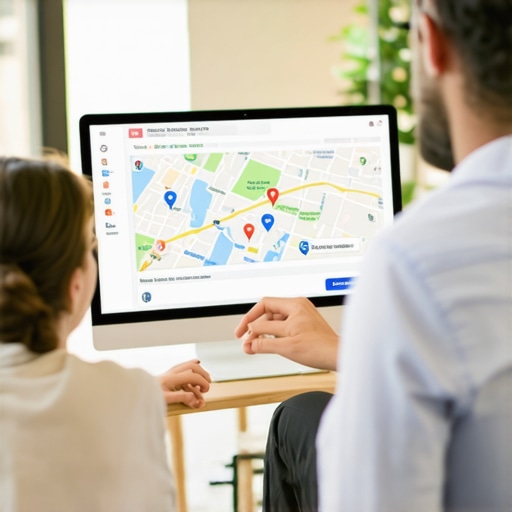
Picture this: I launched a local business in Saint Paul, excited about the services I offered. Weeks went by, and despite my efforts, my Google Maps listing was buried deep in search results. Frustration set in. I realized early on that without a strategic approach to local SEO and GMB optimization, my visibility would stay stagnant. That lightbulb moment changed everything for me—and it can for you too.
Why Local SEO and Google Maps Matter More Than Ever in Saint Paul
Saint Paul is bustling. With thousands of local searches happening every day, your potential customers are actively looking for your services. If your business isn’t showing up on Google Maps or your GMB profile isn’t optimized, you’re basically invisible in the local scene. According to recent studies, over 70% of users click on the first three local results in Google Maps, making it crucial to rank well within your area. Yet, many businesses overlook the power of a well-crafted local SEO strategy that leverages Google Maps effectively. That was my biggest mistake early on—assuming that just having a profile was enough.
Is GMB Optimization Really That Important in 2025?
Absolutely. I’ve seen firsthand how consistent, strategic GMB management can boost local visibility dramatically. But I also learned the hard way that not all tactics are created equal. My initial approach was scattershot—focusing on reviews without optimizing my profile details—and it didn’t move the needle. It’s easy to fall into the trap of thinking that simply creating a listing is enough. Trust me, I made that mistake. The truth is, proper optimization is what truly unlocks your Google Maps potential. For concrete tactics, check out this guide.
If you’ve faced the challenge of getting your local business to stand out in Saint Paul, know that you’re not alone. And you don’t have to stay stuck. The good news is, with the right strategies, you can dominate your local search landscape. Let’s explore the proven steps to get your Google Maps and GMB profiles ranking higher and attracting more local customers.
Claim and Optimize Your Google My Business Profile
Start by claiming your Google My Business (GMB) listing if you haven’t already. Once claimed, fill out every detail: business name, address, phone number, website, and hours. Use consistent NAP (Name, Address, Phone) information across all online platforms to build trust with Google. Upload high-quality photos that showcase your business, and regularly update your profile with new images and posts.
Research and Use Local Keywords Effectively
Identify keywords your local customers search for. Use tools like Google Keyword Planner or SEMrush to find relevant terms. Incorporate these naturally into your business description, service pages, and Google My Business description. Think about the questions your customers ask and include those keywords. For example, “Best pizza in Saint Paul” or “Saint Paul plumbing services.” This strategic keyword placement helps Google connect your profile with local search queries.
Build Local Citations and Consistent Listings
Ensure your business appears consistently across online directories like Yelp, Bing Places, and local chamber of commerce websites. Inconsistent NAP information can confuse Google and hurt your rankings. Use a citation management tool or hire an expert to audit and correct your listings. The goal is to create a cohesive web of references that validate your business location and services.
Gather and Manage Reviews Actively
Encourage satisfied customers to leave positive reviews on your GMB profile. Respond promptly to all reviews, thanking reviewers and addressing any concerns. Reviews are a critical ranking factor; the more genuine and positive reviews you have, the higher your chances of appearing prominently on Google Maps. Consider creating a simple review solicitation process that makes it easy for customers to share their feedback.
Implement On-Page SEO for Local Visibility
Optimize your website for local search by including your city and neighborhood names in page titles, headers, and meta descriptions. Embed a Google Map on your contact page and ensure your contact info matches your GMB listing. Structured data markup (Schema.org) for local businesses can also signal to Google your precise location and services, boosting your local rankings.
Leverage Local Backlinks and Partnerships
Earn backlinks from reputable local websites—think local news outlets, community blogs, and industry associations. These backlinks act as votes of confidence in Google’s eyes. You can achieve this by sponsoring local events, participating in community activities, or guest blogging on local sites. The more authoritative links pointing to your site, the higher your local search authority.
Monitor, Analyze, and Adjust Your Strategy
Use tools like Google Search Console and Google My Business Insights to track your performance. Watch for changes in rankings, traffic, and review activity. Regularly update your profile, refresh your website content with new local keywords, and adapt your tactics based on what the data shows. Consistency and ongoing effort are key to sustained success.
Implementing these steps might seem daunting at first, but consistent application yields results. Remember, local SEO is a marathon, not a sprint. Keep refining your approach, and you’ll see your Saint Paul business climb the local rankings and attract more customers.
Many business owners believe they understand the essentials of local SEO and Google Maps optimization, but in reality, several misconceptions can hinder your progress. Let’s dig deeper into what most people get wrong and how to avoid costly mistakes.
Why Do So Many People Overlook the Nuances of GMB Optimization?
A frequent misunderstanding is thinking that claiming a GMB profile and adding basic information is enough. In fact, consistent updates, nuanced keyword integration, and active review management are crucial for long-term success. Skipping these steps can lead to stagnation or even ranking drops. For example, many assume that reviews alone will boost their ranking, but reviews without proper profile optimization won’t have the desired impact. It’s a common myth that Google’s algorithm rewards volume over quality—yet, expert strategies show that a balanced approach of reviews, keywords, and engagement is key.
Another trap is overemphasizing keywords while neglecting profile accuracy and consistency. Keyword stuffing can harm your reputation and rankings. Instead, focus on natural language that matches your customer’s search intent, which requires an advanced understanding of local search behavior. For instance, including neighborhood-specific terms in your description is more effective than generic keywords.
What Advanced Mistakes Should You Watch Out For?
One significant mistake is ignoring structured data markup or Schema.org integration. While it sounds technical, implementing local business schema can give Google clearer signals about your location and services, giving you an edge over competitors who neglect this. According to Moz, structured data can directly impact local SERP features and visibility, especially in competitive markets.
Another overlooked nuance is the importance of local backlinks. Many think backlinks are only for national SEO, but local backlinks from community sites, newspapers, or industry partners build local authority and trust—vital for Google Maps rankings. Building these backlinks requires strategic relationship-building, not just link-building tactics.
Lastly, be wary of relying solely on automations and shortcuts. While tools can help, they often miss the subtle signals that Google’s algorithm values—like personalized engagement and genuine customer interactions. Consistent, human-centered management of your GMB profile and local citations remains the cornerstone of effective local SEO.
In summary, the real secret isn’t just in doing the basics but mastering these nuances. If you want to unlock local success and avoid common pitfalls, focus on these advanced strategies. Have you ever fallen into this trap? Let me know in the comments.
Maintaining the momentum of your local SEO efforts, especially on platforms like Google Maps and GMB, requires the right tools and a consistent strategy. Over time, the landscape shifts, and staying ahead means leveraging technology that streamlines your workflow and keeps your profiles optimized. Here’s what I personally recommend based on my experience, along with insights into where this trend is heading.
How do I keep my local SEO thriving over time?
First, invest in a reliable citation management tool like BrightLocal. I use BrightLocal daily to audit my business listings across hundreds of directories. Its automated scans help me spot inconsistencies in NAP data and fix them before they cause ranking drops. This proactive approach ensures my citations remain accurate, which is essential for local search trustworthiness. Additionally, BrightLocal’s review tracking feature keeps me on top of new customer feedback, allowing me to respond promptly—an important ranking factor.
Next, I rely on Google Search Console and Google My Business Insights for performance monitoring. These free tools provide real-time data about your rankings, clicks, and engagement. I review these metrics weekly to identify any fluctuations and adapt my strategy accordingly. For example, if I notice a dip in local visibility, I might revisit my keyword targeting or update my profile with fresh images and posts.
For ongoing content and keyword optimization, I use SEMrush. I find SEMrush invaluable for tracking my local keywords, discovering new opportunities, and analyzing competitors’ strategies. Its Position Tracking tool helps me see how my rankings evolve over time, so I can tweak my on-page SEO and GMB posts for maximum impact.
To streamline review management, I utilize Podium. This platform consolidates reviews from Google, Facebook, and other sources into one dashboard. I set automated review requests after each job, which has significantly increased my positive feedback. Responding to reviews quickly not only boosts my reputation but also signals active engagement to Google.
Looking ahead, the trend points toward more AI-powered tools that can predict ranking changes and suggest optimizations in real-time. As algorithms become more sophisticated, leveraging these technologies will be crucial. For instance, regular mini-audits using AI-based platforms will help identify issues before they impact your rankings.
Start by testing one of these tools today—perhaps BrightLocal for citation consistency or SEMrush for keyword tracking—and see how it elevates your ongoing efforts. Remember, consistent maintenance is key to long-term success in local SEO, and these tools can make that process more manageable and effective.
Want to learn more about advanced local SEO tactics? Check out this guide for deeper insights into keeping your Saint Paul business at the top of local search results.
The Hardest Lesson I Learned About Local SEO in Saint Paul
One of my biggest mistakes was underestimating the power of active review management. I thought collecting reviews was enough, but I learned that engaging with customers and responding genuinely can significantly boost your local rankings. It’s not just about quantity but quality and consistency in interaction.
How Ignoring Nuances Cost Me Time and Customers
I initially focused solely on keyword stuffing in my profile and website, believing more keywords meant better rankings. It backfired — Google penalized me for unnatural language. Instead, I discovered that natural, customer-focused descriptions with targeted local terms outperform keyword overload every time.
The Surprising Role of Structured Data That Transformed My Strategy
Implementing Schema.org markup was a game-changer. I didn’t realize how much clearer Google’s understanding of my business could be with proper structured data. This subtle tweak helped my profile stand out in local search features and maps, giving me a competitive edge.
The Value of Local Backlinks I Never Fully Appreciated
Building relationships with local community sites and industry partners for backlinks initially seemed optional. But I found that local backlinks are like votes of confidence in Google’s eyes—improving my authority and visibility in Saint Paul. It’s a long-term investment that pays off with higher rankings and trust.
What I Wish I Knew When Starting Out
Consistency and human engagement are king. Automating everything might save time, but genuine interactions with customers and continuous profile optimization are what truly elevate local SEO results. Never underestimate the power of community connections and ongoing effort.