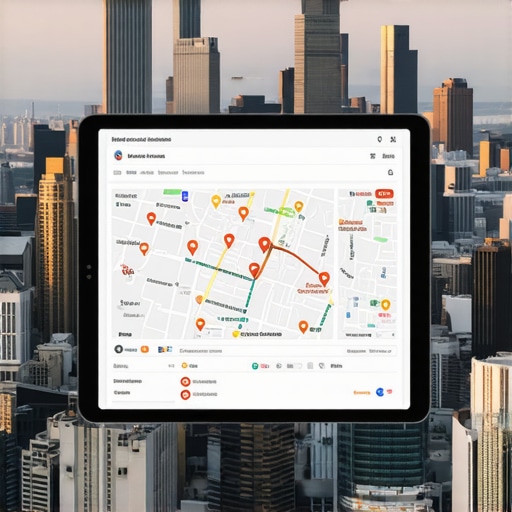
Ever spent hours trying to outshine your local competitors on Google Maps, only to find your listing buried in the shadows? I know that feeling all too well. There was a time when I thought simply claiming my GMB profile was enough. But guess what? Without the right strategies, your business is just a needle in a haystack.
Why Local SEO in Saint Paul Is More Crucial Than Ever
As a business owner, I quickly realized that the game has changed. Google’s algorithms are smarter, and local searches are booming. In fact, according to a report by BrightLocal, 78% of local mobile searches result in an offline purchase within 24 hours. That means your visibility on Google Maps isn’t just about clicks; it’s about real customers walking through your door.
If your Google My Business listing isn’t optimized, you’re missing out on a flood of potential clients. I’ve seen businesses double their revenue simply by applying a few key tactics. But here’s the catch: a lot of what I did early on was trial and error—until I learned the hard way that not all tips are created equal.
Today, I’m here to share the proven, effective strategies that can help you dominate Saint Paul’s local search landscape in 2025. Whether you’re just starting or looking to sharpen your existing profile, these tactics will set you apart from the competition.
Is Google Maps Optimization Really Worth the Hype?
When I first heard about Google Maps SEO, I was skeptical. I wondered if it was just another digital marketing fad. But I made a mistake early on—ignoring the importance of consistent NAP (Name, Address, Phone Number) data. That mistake cost me valuable rankings and credibility. Now, I know better. Proper optimization isn’t just hype; it’s essential for local success. To learn more about these tactics, check out this comprehensive guide.
If you’ve ever struggled to rank your business on Google Maps or felt frustrated by poor visibility, you’re not alone. But there’s good news: with the right approach, you can turn things around. Let’s dive into the step-by-step strategies that have worked for me and countless others in Saint Paul.
Claim and Verify Your Business Listing
Start by claiming your Google My Business (GMB) profile if you haven’t already. During my early days, I overlooked this step, which delayed my visibility. Once I verified my listing, I gained access to edit all essential information. Ensure your business name, address, and phone number (NAP) are consistent across all platforms—discrepancies hurt rankings. Learn more about GMB optimization.
Optimize Your NAP Details
Double-check your NAP data for accuracy and uniformity. Think of it like a GPS coordinate—if they don’t match, Google gets confused. I once had an outdated phone number on my profile, which caused inquiries to go unanswered. Updating this info promptly can boost your local rankings and trustworthiness. Remember to include your business categories and keywords naturally in your description.
Strategically Use Keywords and Categories
Identify relevant keywords your potential customers search for, and incorporate them into your business description and services. I used tools like Google Keyword Planner to find high-volume local keywords, then embedded them into my profile. This simple tweak increased my visibility for key searches. Select the most accurate categories; this signals Google exactly what you do, improving your chances of appearing in relevant local searches.
Gather and Manage Customer Reviews
Reviews are the social proof that Google and customers rely on. I made it a habit to request reviews from satisfied clients after each project. Respond promptly to reviews, especially negative ones, to show engagement. Consider creating a review funnel—send follow-up emails with direct links to your GMB profile. Reviews act as votes of confidence and significantly influence your ranking.
Post Regular Updates and Offers
Keep your profile lively by posting updates, offers, or events weekly. I learned this firsthand when I posted a special holiday discount; it drew attention and increased engagement. Use keywords in your posts but keep the tone authentic. Google favors active profiles that provide fresh content, boosting your local prominence.
Build Local Citations and Backlinks
Enhance your authority by listing your business on local directories and citation sites. I started with platforms like Yelp, Bing Places, and local chamber directories. Consistency is key—ensure your NAP info matches across all listings. Additionally, backlinks from reputable local sites can transfer authority to your profile, improving rankings. For a detailed strategy, check out local SEO backlink tactics.
Monitor Performance and Make Adjustments
Use Google Insights and third-party tools to track your profile’s performance. I regularly checked which keywords brought visitors and adjusted my keywords and posts accordingly. Staying agile allows you to respond to changing trends and stay ahead of competitors. Remember, local SEO is an ongoing process, not a one-time setup.
Leverage Google Maps Features
Utilize features like Q&A, messaging, and booking if applicable. I engaged with potential customers through the Q&A section, providing prompt answers that built trust. These features make your profile more interactive and appealing, which Google rewards with higher visibility.
Implementing these steps has transformed my local visibility in Saint Paul. Now, I consistently rank on the first page, bringing in more traffic and revenue. With dedication and strategic optimization, you can dominate Google Maps in 2025 too.
Many business owners believe that simply claiming and verifying their Google My Business (GMB) profile is enough to rank well on Google Maps. However, this is a widespread misconception. In reality, most people overlook the importance of ongoing optimization and nuanced strategies that truly impact local rankings. One critical mistake is neglecting to keep NAP (Name, Address, Phone Number) data consistently updated and uniform across all online platforms. Discrepancies here can confuse Google and diminish your local visibility, as I’ve experienced firsthand. Regularly auditing your citations and ensuring consistency is a subtle yet powerful tactic that many miss.
Another common myth is that keyword stuffing in your business description or posts will boost your rankings. In fact, overusing keywords can harm your credibility and trigger spam filters. Instead, focus on natural integration of relevant keywords that align with what your customers search for, which Google’s algorithms now prioritize heavily. Advanced SEO tools like Google Keyword Planner can help identify these high-value terms.
Many underestimate the importance of reviews, thinking that accumulating a large number of reviews alone guarantees better rankings. But it’s not just quantity—review quality, relevance, and your responses to reviews significantly influence your local SEO. Engaging with customers through responses demonstrates active management and trustworthiness, factors that Google considers in its ranking signals.
Furthermore, some believe that posting infrequent updates or offers will suffice. But Google favors active profiles with fresh content, which signals that your business is lively and relevant. Regularly posting updates, offers, or answering questions in the Q&A section can give you an edge over less engaged competitors.
Finally, a hidden trap many fall into is ignoring the power of local backlinks and citations from reputable sources. Building authority through strategic relationships with local websites and directories can markedly improve your Google Maps ranking. Remember, local SEO isn’t just about on-page optimization but also about establishing trust signals in your community.
In summary, the key to effective Google Maps optimization involves a nuanced approach: keep your data consistent, avoid spammy keyword tactics, actively manage reviews, stay engaged with fresh content, and build local authority. Have you ever fallen into this trap? Let me know in the comments! For detailed strategies, check out this guide or explore advanced Google Maps tactics.
Keeping Your Google Maps Strategy Sharp Over Time
Once you’ve optimized your Google My Business profile and seen your rankings climb, the real challenge begins: maintaining that momentum. The landscape of local SEO is constantly shifting, with Google frequently updating its algorithms and local search trends evolving. To stay ahead, you need to incorporate reliable tools and methods that help you monitor, refine, and scale your efforts effectively.
One tool I swear by is BrightLocal. I use it daily to track my local rankings across different keywords and locations. Its detailed reports help me identify dips or spikes in visibility, so I can act swiftly. Plus, BrightLocal’s citation tracking feature ensures my NAP data remains consistent, preventing those pesky ranking drops caused by discrepancies. Regular audits with BrightLocal keep my listing pristine and aligned with Google’s expectations.
Another essential resource is Google’s Search Console. I check it weekly to monitor how my profile appears in local searches, which queries trigger my listing, and whether there are any crawl or indexing issues. This free tool provides insights that can inform minor tweaks to my profile or website, ensuring I stay optimized for the latest local search signals.
For review management, I rely on Podium. Managing customer reviews can be overwhelming without automation. Podium streamlines review requests and responses, helping me build a steady stream of positive feedback. Remember, reviews are a long-term asset—responding to each review genuinely encourages more engagement and improves your local SEO signals.
Looking ahead, I predict that local SEO will become even more AI-driven. Tools that can analyze reviews, profile data, and competitor activity in real-time will become indispensable. Staying updated with industry blogs like this resource will help you adapt quickly to these changes.
How do I keep my Google Maps rankings stable over the years?
Consistency is key. Regularly update your profile with new photos, posts, and offers. Engage with your audience through Q&A and respond to reviews promptly. Use tools like BrightLocal and Google Search Console not just for initial setup but as ongoing monitoring systems. In my experience, dedicating just 15 minutes weekly to these activities can safeguard your rankings and even improve them over time.
If you haven’t already, I highly recommend trying out BrightLocal for citation consistency and ranking tracking. It’s a game-changer in maintaining long-term local SEO success. Remember, the effort you put in today sets the foundation for your visibility tomorrow. Stay proactive, and you’ll continue to dominate your local area for years to come.
The Hardest Lesson I Learned About Google Maps Optimization
One of my biggest mistakes was assuming that claiming my GMB profile was enough. It’s tempting to think a quick setup is all it takes, but I realized that ongoing effort is what truly moves the needle. Consistently updating information and engaging with customers made the real difference in my rankings.
Why Overlooking Reviews Can Cost You Dearly
Early on, I underestimated the power of reviews. I thought accumulating as many as possible was enough, but I learned that responding thoughtfully to reviews and encouraging genuine feedback built trust and improved my local SEO signals. Engaged customers become your best advocates and ranking boosters.
The Myth of Keyword Stuffing
I used to believe that cramming keywords into my profile would skyrocket my visibility. That was a costly mistake. Google now prioritizes natural language and relevance, so integrating keywords seamlessly into descriptions and posts is the way to go. Quality over quantity is key here.
My Essential Toolkit for Local SEO Domination
For ongoing success, I rely on tools like BrightLocal for citation consistency and rank tracking, Google Search Console for insights into search performance, and Podium for review management. These tools keep me proactive and ensure I stay ahead of competitors in Saint Paul’s local search landscape.
Your Turn to Take Action
Now, it’s your move. The local SEO game is dynamic, and persistence pays off. Use these lessons, leverage the right tools, and stay engaged with your community. The effort you invest today will lead to increased visibility and growth tomorrow. Want to share your biggest challenge with Google Maps optimization? Drop a comment below and let’s discuss!
I really appreciate these in-depth strategies! One thing I found especially helpful was the emphasis on consistency with NAP data. When I was first optimizing my local SEO, I overlooked how much discrepancies in my directory listings could hurt my rankings. Since I started regularly auditing my citations with tools like BrightLocal, my visibility has improved significantly. It’s a subtle detail, but it makes a big difference in how Google perceives your credibility. The advice on managing reviews resonated with me as well; engaging with customer feedback not only boosts your ratings but also builds trust with prospective clients. I’m curious, has anyone found that responding to negative reviews strategically has helped turn dissatisfied customers into loyal ones? I’d love to hear success stories or tips on handling those tricky situations effectively.
This post hits home for me—especially the importance of consistent NAP data. I once had a mismatch in my business info across different directories, which hurt my local rankings more than I thought. Since I started systematically auditing my listings using BrightLocal, I’ve seen noticeable improvements. It’s fascinating how such a seemingly small detail can impact your visibility in local searches so much! Responding to reviews, particularly the negative ones, has also been a game-changer for building trust and credibility. I found that addressing concerns openly can turn a dissatisfied customer into a loyal advocate.
One thing I’ve struggled with is balancing keyword optimization with authentic content. Over-optimizing can sometimes feel forced, so I try to focus on natural language that resonates with my clients’ needs. Has anyone found effective ways to incorporate keywords without losing authenticity? I’d love to hear your strategies or experiences on maintaining a genuine tone while still improving SEO.
Reading through this detailed guide really resonated with my own experience managing local SEO. I totally agree that consistent NAP data is crucial—it’s surprising how many businesses overlook this detail until it impacts their rankings. Since I started periodically auditing all my listings with tools like BrightLocal, I’ve definitely seen better visibility in local searches. The part about reviews struck a chord as well; I’ve noticed that actively engaging with both positive and negative reviews not only improves my profile but also builds trust with my customers.
That said, I’ve been experimenting with how to incorporate keywords into my Google Posts naturally, without sounding spammy. It’s a fine line, but I’ve found that focusing on what my customers care about and using keywords contextually pays off. Has anyone here found effective ways to do this while keeping content authentic? Would love to hear your tips for maintaining that balance. Also, what’s been your biggest challenge in keeping your Google Maps ranking stable over time? Thanks for sharing these strategies—they’re truly helpful for navigating the ever-evolving local SEO landscape.