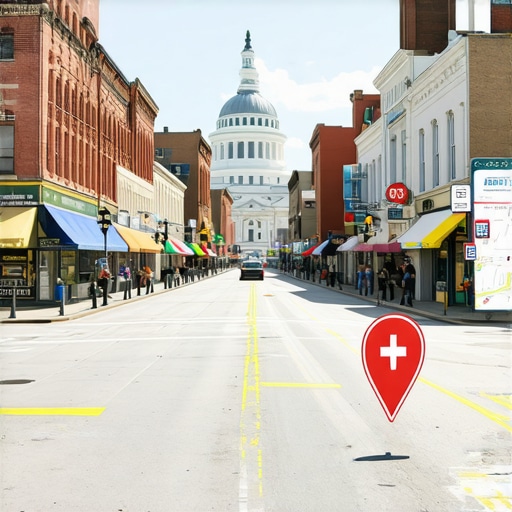
My Journey into Google Maps Optimization in Saint Paul
As a local business owner in Saint Paul, I vividly remember the first time I realized how crucial Google Maps was for my visibility. I was struggling to attract new customers until I decided to optimize my Google My Business (GMB) profile. That decision transformed my approach to local SEO and significantly boosted my presence in the community.
Why Local SEO Matters More Than Ever
In today’s digital age, customers often search for services nearby, and being visible on Google Maps can make or break a business. I learned this firsthand when I studied how local search results appear and how crucial consistent NAP (Name, Address, Phone Number) data is. According to Minnesota SEO agency secrets, local SEO strategies are essential for dominating Google Maps in Saint Paul.
Practical Tips I Implemented for Better Rankings
One of the most effective tactics I adopted was regularly updating my GMB profile with fresh photos and posts. I also made sure to gather genuine reviews from satisfied customers, which improved my trustworthiness and rankings. The importance of keyword-rich descriptions cannot be overstated, as they help Google understand my business better. For those interested, I highly recommend exploring detailed strategies in this guide on boosting your Google Maps visibility.
How Do I Know If My Efforts Are Paying Off?
Tracking my local rankings became an ongoing process. I used tools like Google Insights and local SEO audits to measure my progress. Seeing my business climb higher in local search results gave me motivation to keep optimizing. If you’re wondering about the specifics, I suggest reading Saint Paul SEO strategies for local success.
What’s the Next Step to Dominate Saint Paul’s Google Maps?
Engaging with the local community and building backlinks from local directories can further enhance your visibility. I also recommend leveraging reviews and responding to customer feedback promptly. Remember, Google favors active and engaged businesses. For comprehensive insights, visit this article on local SEO strategies.
If you’ve had success with Google Maps optimization or face challenges, I’d love to hear your experiences. Drop a comment below or reach out through my contact page. Sharing our stories helps everyone grow in Saint Paul’s competitive local market!
Unlocking the Power of Local Citations in Saint Paul
Building a robust network of local citations remains a cornerstone of effective local SEO. Citations—mentions of your business name, address, and phone number (NAP)—across reputable directories and local platforms reinforce your presence to Google. When these citations are consistent and strategically placed, they signal to search engines that your business is a trusted entity within the community. For example, partnering with local chambers of commerce or industry-specific directories can elevate your visibility significantly. For insights on implementing this, explore this guide on local SEO tactics.
The Role of Schema Markup in Local SEO
While many overlook technical SEO elements, schema markup—especially local business schema—can give your Saint Paul business an edge. By adding structured data to your website, you help Google better understand your business details, services, and location. This can enhance your appearance in local search results with rich snippets, such as star ratings, business hours, and contact info. Incorporating schema is a nuanced process, but the payoff is increased click-through rates and improved rankings. For a deep dive, see this comprehensive resource on local SEO schema implementation.
What Are the Common Pitfalls That Undermine Your Local SEO Efforts?
Many Saint Paul businesses unknowingly sabotage their local SEO by neglecting critical factors. These include inconsistent NAP data across citations, neglecting to respond to reviews, or ignoring the importance of localized content. Additionally, over-optimizing keywords or engaging in spammy link-building can lead to penalties. An often-overlooked aspect is mobile optimization—since most local searches happen on smartphones, your website must be fast and mobile-friendly. Regular audits can help identify and rectify these issues. For expert advice, visit this authoritative guide.
How Can I Leverage Customer Engagement to Boost My Google Maps Rankings?
Engagement is more than just reviews; it includes responding to customer questions, posting updates, and actively participating in local community events. Google values active, engaged businesses because they are perceived as trustworthy and relevant. Encouraging satisfied customers to leave detailed reviews, and thanking them for their feedback, can enhance your reputation and rankings. Moreover, creating localized content—such as blog posts about community events—can attract local backlinks and increase your authority. To learn more about harnessing engagement, check out this article on local SEO engagement strategies.
If you’re looking to elevate your Saint Paul business’s visibility and want expert guidance, don’t hesitate to reach out through our contact page. Sharing your success stories or challenges can help tailor strategies that work best in your unique market. Remember, the path to local SEO mastery is ongoing, requiring consistent effort and adaptation.
Deepening Your Local SEO Playbook: Personal Lessons from Saint Paul
Over the years, my journey into Google Maps optimization has evolved from simple profile tweaks to mastering intricate strategies that demand a nuanced understanding of local SEO dynamics. One of the most profound lessons I’ve learned is that ranking well isn’t just about keywords and citations; it’s about creating an ecosystem where your business is perceived as an integral part of the community fabric. This realization came after countless experiments, analyses, and conversations with local entrepreneurs who, like me, found that authentic engagement and strategic consistency were game-changers.
Why Authentic Community Engagement Trumps Technical Tricks
In the early days, I was obsessed with technical SEO—schema markups, backlink profiles, and keyword stuffing. But I soon noticed that genuine community involvement amplified my presence far more effectively. Attending local events, sponsoring neighborhood initiatives, and actively participating in community forums built trust and increased my local relevance. Google’s algorithms are increasingly sophisticated in detecting authentic signals of community trustworthiness, as discussed in this in-depth guide. When your business is seen as a community pillar, your Google Maps ranking naturally benefits.
Balancing Technical Optimization with Human Touch
While community engagement is vital, neglecting the technical side can still hinder your success. I’ve found that a balanced approach—combining schema markup, consistent NAP data, and prompt review responses—sets the foundation for lasting visibility. For instance, implementing local business schema helped my listings appear with rich snippets, which increased click-through rates. You can explore advanced schema tactics in this resource. The key is understanding that technical SEO and human engagement are two sides of the same coin; neglecting either can limit your growth.
How Do I Tackle the Most Subtle, Yet Critical, SEO Challenges?
One challenge I faced was maintaining citation consistency across myriad local directories. Small discrepancies—like a missing suite number or a typo—can diminish your trustworthiness in Google’s eyes. To combat this, I adopted a rigorous audit process, regularly cross-referencing my NAP data across platforms. Another subtle yet impactful tactic involved responding to every review—positive or negative—showing Google that my business values customer feedback. This also fosters a sense of community among my clientele. For more advanced insights, I recommend exploring this expert guide.
What’s the Role of Local Content in Elevating Google Maps Rankings?
Creating localized content—such as blog posts about community events, local news, or customer stories—can significantly boost your authority and relevance. Google prioritizes active businesses that contribute meaningful content to their local ecosystem. I’ve seen firsthand how sharing stories about local partnerships or charity events not only enhances engagement but also attracts backlinks from local media and blogs. This strategy, coupled with optimized GMB posts, helps reinforce your business’s presence in the community and search results. For further ideas, check this article.
If you’re navigating the complex landscape of local SEO in Saint Paul, I encourage you to share your experiences or challenges. Perhaps you’ve uncovered a unique tactic or faced an unexpected obstacle—your insights could be invaluable for others striving to elevate their local presence. Drop a comment or connect through my contact page, and let’s continue this journey of community-driven growth together.
Innovative Link Building Techniques for Local Authority Domination
Building local authority in Saint Paul requires more than just citations and reviews; it demands strategic link building that leverages community assets and niche partnerships. I discovered that collaborating with local educational institutions, sponsorships of community events, and guest blogging on reputable local blogs can create a network of high-quality backlinks. These tactics not only boost my Google Maps rankings but also embed my business deeper into the community fabric. According to recent insights from Minnesota SEO agency secrets, authority signals are vital for local search dominance.
Harnessing the Power of Advanced Schema Markup for Richer Listings
While basic schema markup can enhance your visibility, deploying advanced local business schemas enables your listings to display comprehensive information—such as service menus, upcoming events, or special offers—directly in search results. This not only increases click-through rates but also signals to Google that your business offers unique value. I implemented JSON-LD structured data tailored to my niche, which resulted in a noticeable uptick in local engagement. For a detailed walkthrough, visit this resource on local SEO schema.
What Are the Emerging Challenges in Local SEO and How Can You Overcome Them?
One of the most subtle yet impactful challenges is managing negative SEO tactics from competitors, such as incorrect NAP details or fake reviews. To counteract this, I set up Google Alerts for my business name and regularly monitor citation accuracy across directories. Additionally, employing reputation management tools helps me swiftly address false reviews and maintain trustworthiness. As highlighted by local SEO experts, proactive reputation management is crucial for safeguarding your rankings against malicious attacks.
How Can I Deepen Customer Relationships to Sustain Long-Term Visibility?
Deepening customer relationships goes beyond reviews; it involves creating personalized experiences that foster loyalty. I started implementing a loyalty program integrated with my Google My Business posts, encouraging repeat visits and direct engagement. Hosting exclusive community events or offering special discounts to local followers also nurtures a sense of belonging. These human-centered strategies enhance my business’s local authority, making Google’s algorithms recognize my brand as a trusted community staple. For more advanced engagement tactics, explore this guide on community engagement.
If you’re ready to push your Saint Paul local SEO to new heights, I invite you to share your experiences or challenges. Whether you’re experimenting with innovative tactics or facing obstacles, your insights can inspire others. Connect with me through the contact page, and let’s continue this journey toward local search mastery together. Remember, sustained success in local SEO combines technical finesse with genuine community involvement—it’s all about creating an ecosystem where your business thrives organically.
Things I Wish I Knew Earlier (or You Might Find Surprising)
1. The Power of Community Engagement
Early in my journey, I underestimated how vital authentic community involvement was for local SEO. Attending local events and sponsoring neighborhood initiatives not only built trust but also significantly improved my Google Maps rankings. It’s a reminder that genuine relationships often outperform technical tricks.
2. Consistency Is King
Keeping my NAP (Name, Address, Phone Number) data consistent across all directories seemed trivial at first, but I learned it’s crucial. Small discrepancies can undermine your credibility with Google and affect your visibility in local searches. Regular audits became a part of my routine.
3. Reviews Are More Than Just Stars
While I initially focused on accumulating reviews, I soon realized responding to each one authentically boosted my credibility and rankings. Engaging with customers in the review section created a community vibe that Google recognizes and rewards.
4. Technical SEO Still Matters
Don’t neglect schema markup and website optimization. Adding local business schema helped my listings stand out with rich snippets, increasing click-through rates and, ultimately, my local visibility.
5. Local Content Is a Game-Changer
Creating blog posts about local events, partnerships, or customer success stories helped deepen my relevance in the community and attracted backlinks from local media. This layered approach made my business a trusted local authority.
6. Mobile Optimization Cannot Be Ignored
Most local searches happen on smartphones. Ensuring my website was fast and mobile-friendly prevented potential visitors from bouncing and kept my rankings healthy.
7. Patience and Persistence Pay Off
SEO is a marathon, not a sprint. Consistent effort over months built a solid foundation that now consistently attracts local customers through Google Maps.
Resources I’ve Come to Trust Over Time
- Google’s Official Business Blog: Staying updated with Google’s latest features and guidelines has been invaluable. It’s the go-to source for official updates.
- MOZ Local: Their in-depth articles and local SEO tools helped me understand best practices and track my progress effectively.
- BrightLocal Blog: Their case studies and tips provided real-world insights that I could apply directly to my strategy.
Parting Thoughts from My Perspective
Mastering Google Maps in Saint Paul has been a rewarding journey that combines technical know-how with authentic community engagement. The key takeaway for me is that success in local SEO isn’t just about algorithms; it’s about creating meaningful connections with your community and consistently showing up. If you’re serious about boosting your local visibility, keep learning, stay persistent, and don’t underestimate the power of genuine relationships. If this resonates with you, I’d love to hear your thoughts. Feel free to share your experiences or ask questions in the comments or through my contact page. Together, we can grow our local businesses and make Saint Paul an even better place to thrive.
This article hit home for me as I’ve recently begun focusing more on local SEO strategies in Saint Paul. I agree that community engagement is often overlooked but can have a major impact on local rankings. I started attending local events and sponsoring neighborhood initiatives, and I saw a real boost in my visibility. What’s been your experience with balancing technical SEO like schema markup and the human aspect of community involvement? Sometimes I wonder if one is more effective than the other or if it’s truly about integrating both for best results. Sharing insights like these really motivate me to refine my approach and build stronger local connections. It’s clear that authenticity and consistency are key, but I’d love to hear others’ thoughts on what tactics have delivered the most return in their local SEO efforts.
Reading through this post really resonated with my own experience in Saint Paul. When I first started optimizing my Google My Business profile, I underestimated how much community involvement could influence my local rankings. Just like you, I found that attending local events and fostering genuine relationships made a tangible difference. Over time, I also focused on technical SEO aspects like schema markup — and I believe balancing both is truly the key. My question is, how do others prioritize their efforts when resources are limited? Should I dedicate more time to active engagement or to technical optimizations like schema? I’ve noticed that consistent community participation keeps my business top-of-mind, but technical improvements seem to offer a steady boost in visibility. Would love to hear how others have managed their efforts for optimal results, especially in a market as dynamic as Saint Paul.
Your story truly resonates with me, especially how balancing community engagement with technical SEO can dramatically impact local rankings. I started with a similar approach—focusing heavily on reviews and citations, then gradually incorporating schema markup and local content. In my experience, authentic community involvement—like sponsoring neighborhood events—builds trust and visibility organically, but technical tactics like schema make your listings standout in search results. I’ve found that setting clear priorities depends on your current position; if your online presence is weak, boosting local engagement might be more effective initially. However, neglecting technical fundamentals can limit organic growth. How do others decide where to allocate their limited resources? Do you focus more on community efforts or technical SEO first, or try to balance both simultaneously? Would love to hear how your experiences compare, especially in the unique landscape of Saint Paul.
Reading your insights really resonates with me, especially how combining community engagement with technical SEO can drive better local rankings. I’ve been working on my own Google My Business profile for a while, and I noticed that while local events and reviews are impactful, paying attention to schema markup and NAP consistency really enhances visibility—especially in a competitive market like Saint Paul. I’ve found that integrating local content, like blog posts about community happenings, alongside technical tweaks, creates a more robust online presence. It got me wondering, how do others prioritize between creating engaging content and investing time in technical SEO? Do you find one more effective than the other in sustaining long-term growth, or is the best strategy a balanced approach? Any tips from those who’ve navigated resource limitations would be especially appreciated. Thanks for sharing your experiences—this discussion is helping me refine my strategy.
Thanks for sharing such a detailed and insightful journey into local SEO in Saint Paul. Your emphasis on community involvement really resonates with me, especially how attending local events and building genuine relationships can significantly impact not just rankings but also community trust. I’ve found that engaging locally often yields more sustained results than purely technical tactics, although I agree that combining both creates a more powerful strategy. A challenge I’ve faced is balancing the time between offline community efforts and optimizing technical aspects like schema markup. In your experience, do you prioritize one over the other during different growth phases? Or do you advocate for a balanced, ongoing approach? I’d love to hear your thoughts on managing resources effectively, especially for small businesses trying to maximize impact without stretching too thin.
This post really highlights how essential balancing technical SEO strategies with authentic community engagement is, especially in a vibrant city like Saint Paul. From my own experience managing a small bakery here, I’ve found that while technical elements like schema markup and maintaining consistent NAP data help, genuinely connecting with the local community through events and social media fosters trust and loyalty that translates into better rankings. I’m curious—how do other local businesses prioritize their efforts when they have limited time and resources? Do you lean more toward technical SEO or community building, or is it better to develop a strategy that blends both? I’ve seen some success in small-scale collaborations with local charities, which not only enhances my credibility but also naturally improves my visibility on maps. Would love to hear other ideas on effective, budget-friendly ways to boost local SEO without spreading yourself too thin.